Handloading 101
The Basic Idea
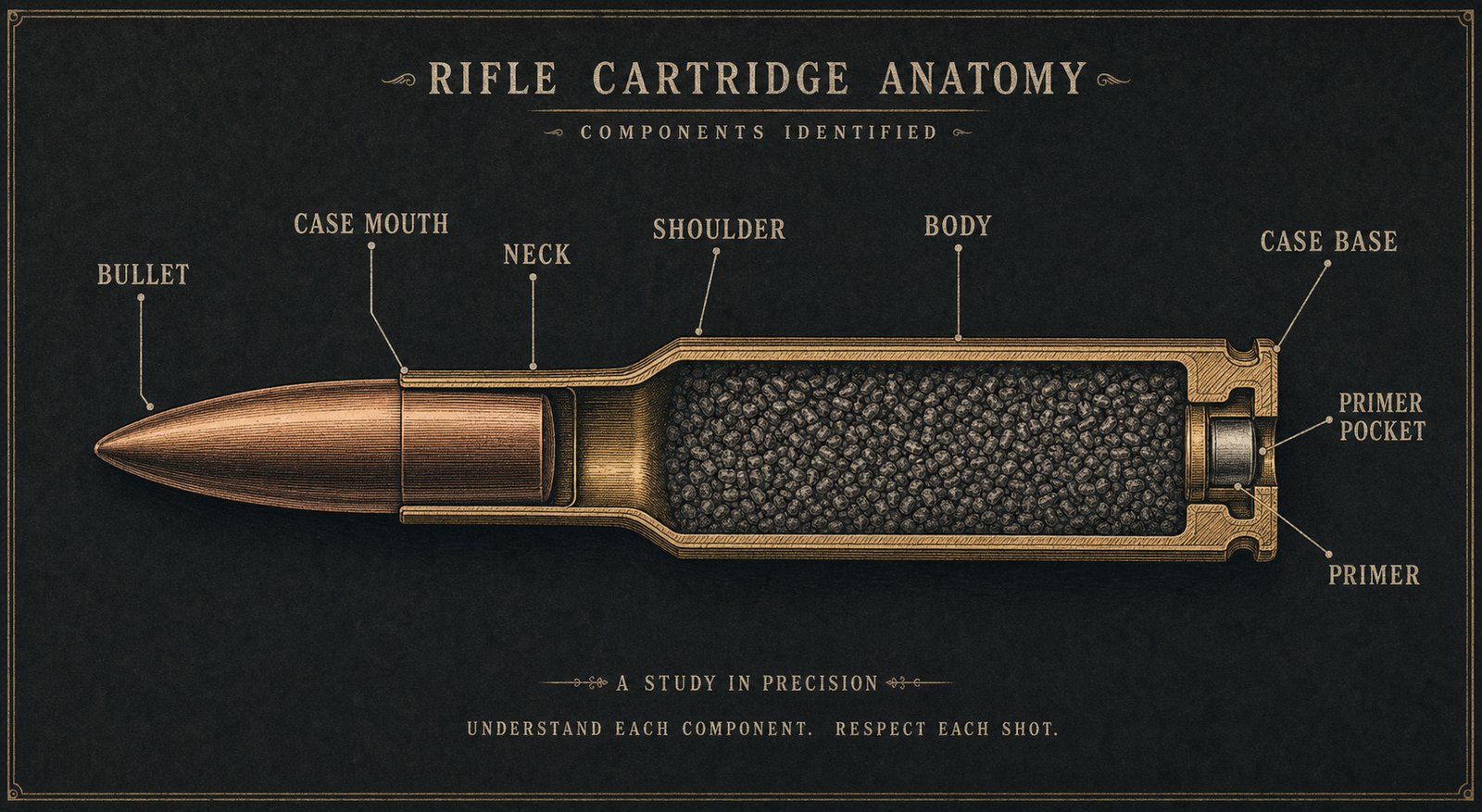
Handloading is the practice of building your own ammunition from four parts: a brass case, a primer (the spark cap at the bottom), gunpowder, and a bullet.
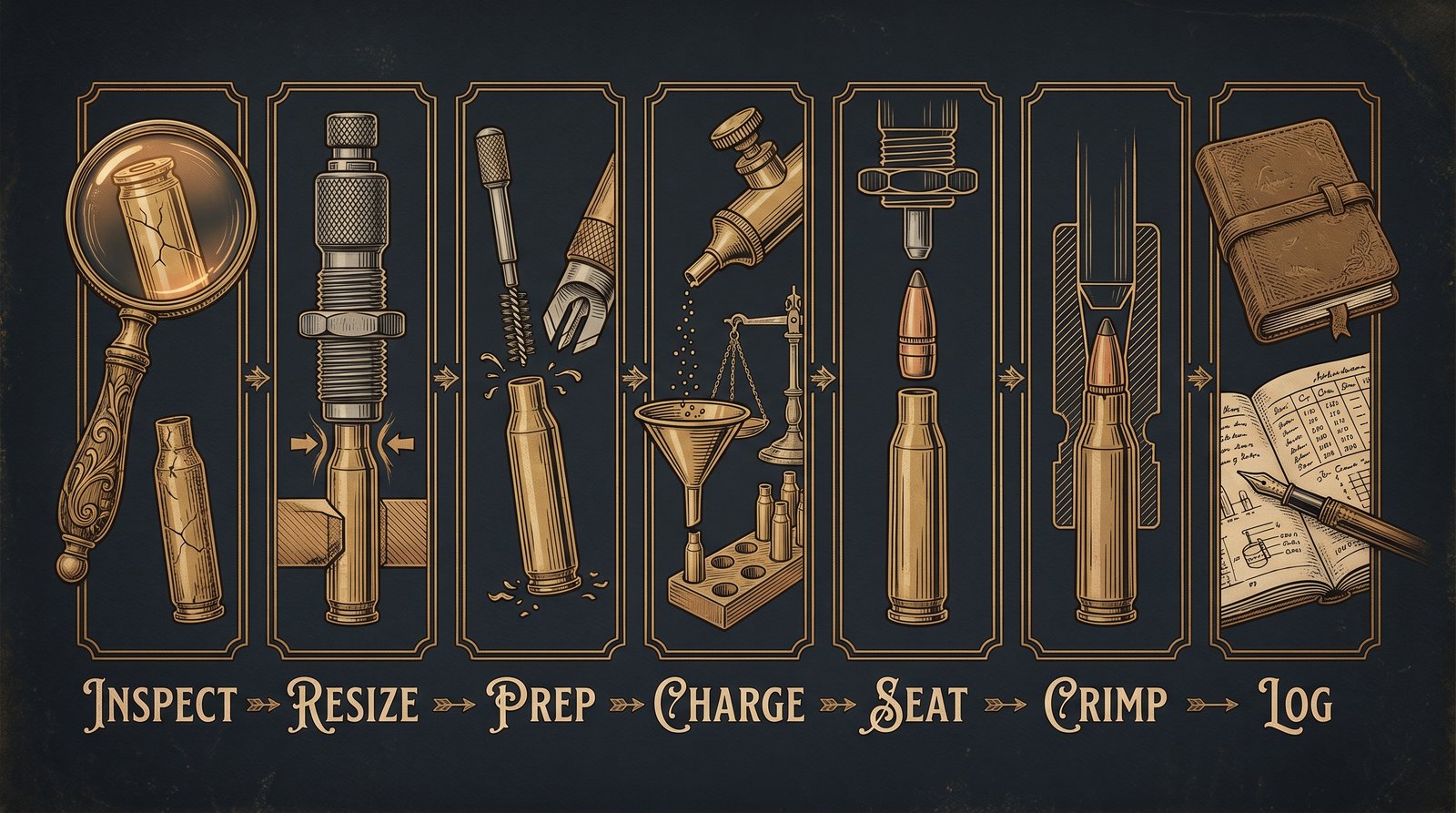
Each round you build, you control. You pick the components, weigh the powder, seat the bullet to a precise depth, and end up with ammunition that costs less per round and shoots tighter than most factory ammo, tuned to your specific firearm.
Why People Do It
Cost. Once you've bought the press and dies, the marginal cost of a high-quality handload is roughly half of factory match ammunition.
Accuracy. Factory ammo is built to fit every rifle in a caliber. Your handload is built for your rifle's specific chamber.
Availability. When the shelves are empty, handloaders keep shooting.
What You Need to Start
A reloading press (single-stage is the friendliest first press), a die set in your caliber, a powder scale that reads to 0.1 grain, calipers, a loading manual from a major manufacturer, and a chronograph if you want to measure your results.
BrassTracker fills the role of your loading log: the notebook reloaders have used for a hundred years to write down what worked and what didn't.
The One Rule
Always start at the published minimum charge in your loading manual and work up slowly. Never go above the published maximum. Pressure signs (flat primers, sticky bolt lift, ejector marks) mean STOP and step back.
If you're new to handloading, read a printed manual cover-to-cover before you load your first round. The Lyman, Hornady, Sierra, and Berger manuals all contain a thorough primer chapter that goes deeper than this page.
Disclaimer. Handloading involves explosive components and is dangerous if done incorrectly. BrassTracker is a logbook. It does not provide load data or replace a published reloading manual. You are responsible for verifying every charge against an authoritative source before pulling a trigger.